Common Mistakes in Gold Testing
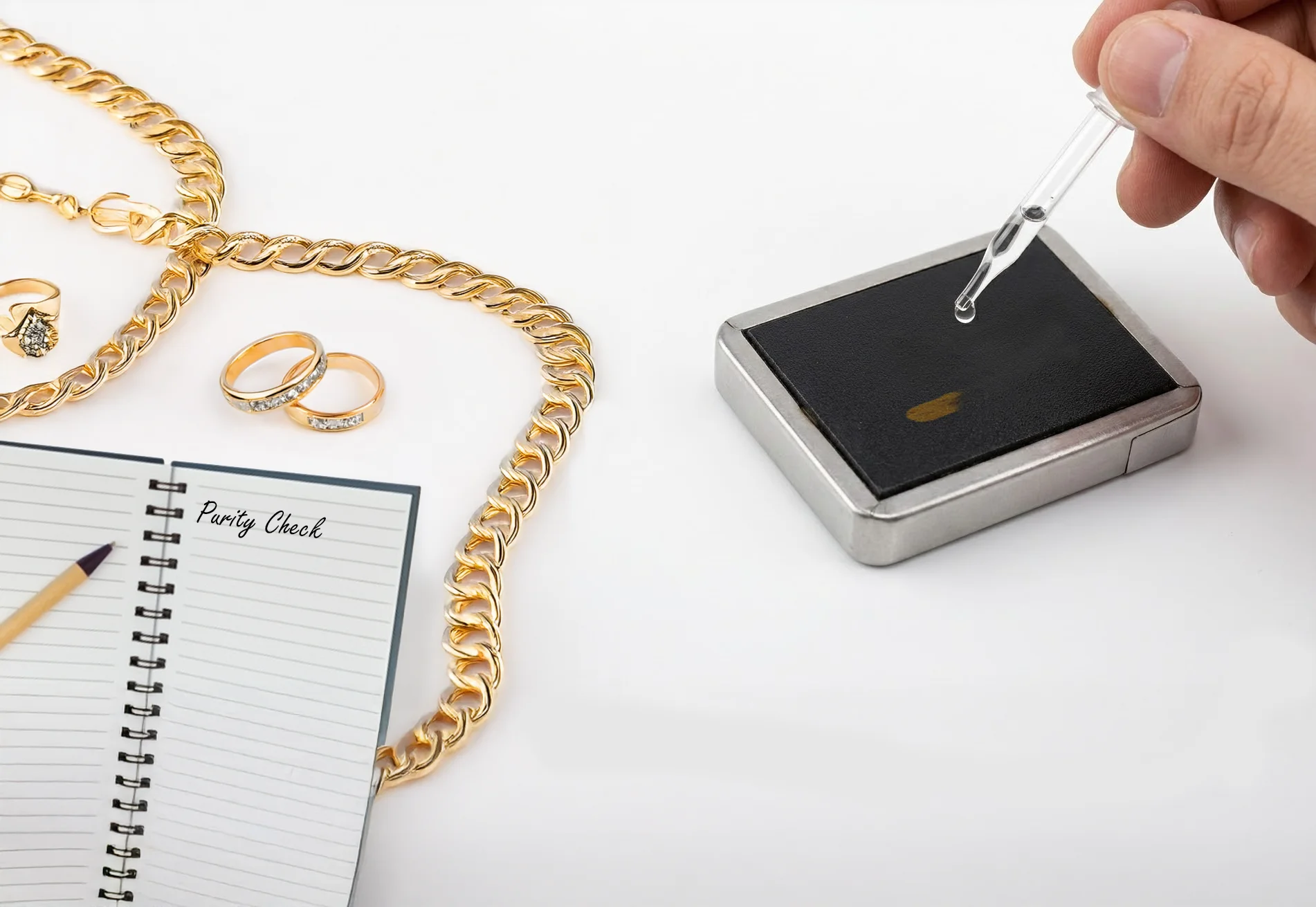
Gold testing plays a critical role in verifying purity and ensuring fair valuation — but even experienced professionals can make costly errors. Incorrect testing may result in undervalued or overvalued gold, create customer disputes, and damage business credibility. This article highlights key mistakes in gold testing and how to avoid them.
- Relying on a Single Testing Method
- touchstone testing, or
- electronic testing, or
- XRF spectrometry
The mistake:
Assuming one method alone gives a complete and final result.
Correct approach:
Use multiple verification methods when possible to cross-validate results.
- Not Cleaning the Gold Surface Properly
Dirt, oil, plating residue, or tarnish can interfere with purity tests.
The mistake:
Testing uncleaned jewellery leads to inaccurate readings.
Correct approach:
Wipe and clean surfaces thoroughly before testing to remove contaminants.
- Testing Hallmarked Items as If They Are Unverified
Professionals sometimes re-test BIS or internationally hallmarked gold without respecting its certified purity.
The mistake:
Damaging certified items or scratching unnecessarily.
Correct approach:
Understand that certified gold already carries verified purity — testing should be minimal and non-destructive unless suspicion arises.
- Misreading Acid Test Results
Acid testing requires experience.
The mistake:
Incorrect interpretation of color changes leads to:
- wrong karat classification
- customer misinformation
- purity confusion
Correct approach:
Training + visual reference charts should be used for interpretation.
- Ignoring Solder or Stone Weight
- solder
- enamel
- stones
- diamonds or gems
The Mistake:
Weighing the entire item as pure gold.
Correct approach:
Account for non-gold materials to estimate net gold weight accurately.
- Using Uncalibrated Electronic or XRF Testers
Digital testers and XRF analyzers require calibration.
The mistake:
Trusting machine output without calibration or periodic servicing.
Correct approach:
- calibrate regularly
- verify with reference standards
- maintain device annually
- Assuming All Yellow Metals Are Gold
Brass, copper alloys, gold-plated items can appear visually identical.
The mistake:
Judging metal purity by color or weight alone.
Correct approach:
Always test — visual inspection is not enough.
- Over-Scraping During Touchstone Testing
Excessive scratching damages jewellery.
The mistake:
Leaving visible marks or removing too much metal.
Correct approach:
Use minimal scraping pressure and fine technique for non-destructive testing.
- Testing on Hollow Jewellery Incorrectly
Hollow chains, bangles, or earrings have empty space inside.
The mistake:
Incorrect density assumptions lead to purity mis-classification.
Correct approach:
Perform careful weight vs. volume analysis or alternative measurement methods.
- Not Considering International Purity Standards
- 417 (USA)
- 750 (Europe)
- 916 (India)
The mistake:
Misinterpreting stamps like above.
Correct approach:
Know international codes to correctly interpret purity.
Conclusion
Accurate gold testing demands technical skill, proper technique, calibrated equipment, and awareness of purity standards. By avoiding these common mistakes, professionals can ensure fairness, protect customer trust, and maintain high-confidence valuation in every transaction.